

Create A Hummingbird Garden

Hummingbird Gardens are very easy to create if you follow a few simple guidelines. Plus, they are fun, beautiful, and can be a low maintenance gardening solution if you set it up that way. Here is how to do it.
When creating a hummingbird garden, you want to think about creating a whole hummingbird habitat. Let’s look at the components of a successful hummingbird garden so that you can have the happiest hummingbirds on the block.
Location:
Before you start planting a hummingbird garden, the first thing that needs to be picked out is the location. The hummingbird garden needs to be positioned where you can see it; otherwise, what is the fun of attracting the hummingbirds in the first place. Also, think about how much room there is to work with. A hummingbird garden can be as small as a window box or as large as several acres. Your garden will also need both sun and shade. Hummingbirds like to hum around in the sun; however, they need shade to rest, cool off, and make a nest for their young.
Flowers:
Hummingbirds are very visual creatures and unlike honey bees, they don’t have a real sense of smell. Hummingbirds love the color red (and other colors) and have terrific sight. Hummingbirds also like tubular or trumpet flowers like those on the Trumpet Vine . Since hummingbirds are natural pollinators as they travel from flower to flower, the flowers will love being a part of your garden.
When planning your hummingbird garden, be careful of hybrid flowers as they can produce less nectar than their wild cousins. This doesn’t mean that they should not be used, just don’t be surprised if your hummingbirds prefer a wild cousin over the hybrid variety. Also, try to select flowers that bloom at different times of the year so that there will always be flowers around for the hummingbirds. Use a variety of flowers and flower colors. You don’t like to eat the same thing every day, and neither do the hummingbirds.
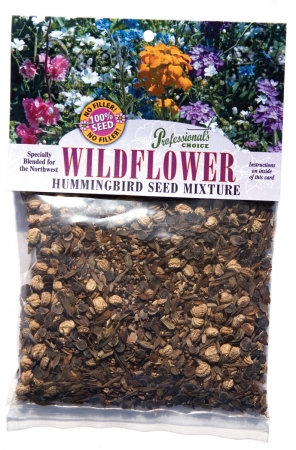
A good place to look for hummingbird flowers that are native to your area is your local garden shop. If your local garden shop is not very helpful, check out our Hummingbird Garden Catalog to see what kind of flower you might like.
When planting your garden, remember that it is good to give some spacing between each plant. This will give the hummingbirds space for their wings to hum.
Trees:
Bottlebrush , Eucalyptus
 , and/or Willow
 are great for a hummingbird garden because they grow nice soft nesting material for the hummingbirds to use in a hummingbird nest. These plants also have wonderful branches with many places for a Momma hummingbird to make her nest in.

Water:
Water is very important to a hummingbird garden. Hummingbirds need water to drink and to bathe. A small birdbath like the ones in the World of Hummingbird Shop or even a bowl works very well. Make sure you change out the water every other day or so to prevent mosquitoes from breeding. Also, try putting in a water mister . The hummingbirds really like taking a shower in a mister and watching them fly through the water can be quite entertaining.
Feeders:
Even though you have all these beautiful hummingbird flowers and vines and trees, you still need to keep hummingbird feeders in your hummingbird garden. Flowers will tend to go in and out of bloom and aggressive hummingbirds will declare a flower theirs. Having an extra feeder or two is just a good insurance policy for that nectar meal a hummingbird needs to eat about every 15-20 minutes. It is really also the best way to get a good look at them.
Bugs:
A great thing about a hummingbird garden is the minimal maintenance, both with the plants and the getting rid of the pests. Hummingbirds love to eat small bugs like gnats, aphids, and spiders. The hummingbirds will even eat all of the bugs out of the spider web, eat the spider, and then steal the web to help build a nest. Pesticides are not needed in a hummingbird garden. The Hummingbirds themselves are great little exterminators and truly earn their keep in the cost of nectar.
Moss:
Hummingbirds will use moss and lichens to help make a nest because the material is nice and soft for baby hummingbirds.
By utilizing these guidelines, you can create a hummingbird garden of your dreams just about anywhere. Don’t forget to check out our Hummingbird Garden Catalog.
